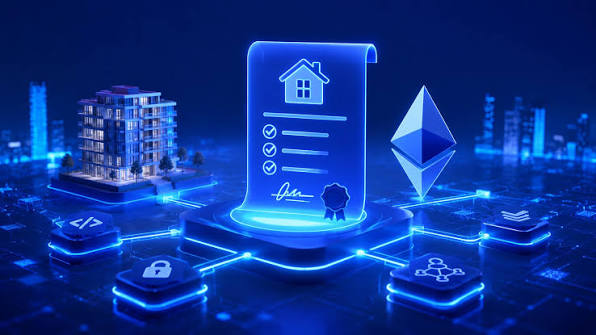
Real estate tokenization is changing how properties can be owned, financed, and traded. By converting ownership interests in real-world properties into blockchain-based digital tokens, businesses can enable fractional ownership, automate transactions, improve transparency, and potentially create new liquidity opportunities.
In 2026, the real-world asset (RWA) ecosystem is moving beyond experimentation, with tokenization platforms increasingly focusing on compliance, investor onboarding, custody, secondary-market infrastructure, and smart-contract automation.
If you are planning to build a real estate tokenization platform, selecting the right development or technology partner is critical. Here are 10 notable companies and platforms worth considering.
- Octal IT Solution
Octal IT Solution is a technology development company offering blockchain and custom software development services for businesses exploring Web3 and tokenization use cases.
For a real estate tokenization project, a development partner such as Octal IT Solution can help build customized components including smart contracts, tokenization platforms, investor dashboards, property-management integrations, wallets, admin panels, KYC/AML workflows, and blockchain-based transaction systems.
- tZERO
tZERO is another important player in the U.S. digital securities ecosystem. Its technology focuses on regulated trading and secondary-market infrastructure for tokenized assets.
For real estate businesses, this type of infrastructure can be valuable because tokenization is not only about creating digital representations of property interests; investors also need compliant mechanisms to manage and potentially trade those assets.
- Lofty
Lofty focuses specifically on fractional real estate investing. Its platform allows users to purchase fractional interests in U.S. rental properties, with ownership represented through blockchain-based tokens.
The platform reports more than $100 million invested and 40,000+ investors, demonstrating the practical application of tokenized real estate at consumer scale.
Lofty can serve as an interesting reference for businesses designing platforms that combine property listings, fractional ownership, investor dashboards, rental distributions, and secondary-market functionality.
- RealT
RealT is a well-known real estate tokenization platform that focuses on fractional ownership of income-generating properties.
Its model demonstrates how blockchain can be used to represent fractional interests in real estate while supporting rental-income distributions. RealT is frequently included alongside Lofty, tZERO, and other leading tokenized real estate platforms.
For companies entering this sector, RealT provides a useful example of combining real estate operations with blockchain-based ownership infrastructure.
- RealBlocks
RealBlocks provides blockchain infrastructure for tokenizing real-world assets, including real estate. Its approach focuses on enabling asset owners and investment managers to create digital representations of traditionally illiquid assets.
The platform is particularly relevant for institutional real estate businesses looking for blockchain-enabled distribution, ownership management, and transaction infrastructure. RealBlocks is also recognized among notable tokenized real estate platforms.
- Polymath
Polymath focuses on security-token infrastructure and blockchain-based compliance. Its technology is relevant to real estate tokenization because many tokenized property interests can involve securities regulations.
A platform built using this type of infrastructure can incorporate identity verification, transfer restrictions, compliance rules, and programmable asset-management capabilities. Polymath is consistently included among leading RWA tokenization platforms.
- DigiShares
DigiShares provides tokenization infrastructure for real-world assets, including real estate. Its solutions can support businesses that want to fractionalize property ownership and create blockchain-based investment platforms.
For real estate companies, tokenization infrastructure can help connect property ownership structures with investor-facing applications, smart contracts, compliance workflows, and transaction systems.
- Centrifuge
Centrifuge is a prominent RWA infrastructure company that focuses on bringing real-world assets onto blockchain-based financial markets.
While its ecosystem extends beyond real estate, its infrastructure is relevant to property-backed financial products and institutional asset tokenization. Centrifuge is frequently identified as a significant RWA platform alongside Securitize, Polymath, and other tokenization providers.
- Kaleido
Kaleido provides enterprise blockchain infrastructure and development tools that businesses can use to build blockchain-based applications.
For real estate tokenization projects, enterprise blockchain infrastructure can support smart contracts, digital asset management, identity systems, APIs, and integration with existing business applications. Kaleido is also listed among notable RWA tokenization platforms.
- Securitize
Securitize is one of the prominent names in digital securities and real-world asset tokenization. The company provides infrastructure for issuing, managing, and distributing tokenized securities, making it relevant for businesses exploring tokenized real estate and other investment assets.
Its ecosystem focuses heavily on regulatory compliance, investor management, digital securities issuance, and secondary-market infrastructure. Securitize is particularly suitable for institutions seeking an enterprise-oriented approach to asset tokenization.
Businesses can use a custom development approach when they need a platform tailored to a specific real estate model rather than adopting an existing investment marketplace.
Key Features of a Real Estate Tokenization Platform
A modern real estate tokenization platform should include more than token creation. Important features may include:
Property listing and verification
Fractional ownership management
Security-token smart contracts
Investor onboarding
KYC/AML verification
Digital wallets
Investor dashboards
Automated rental-income distribution
Cap-table management
Property valuation and reporting
Secondary-market functionality
Payment and fiat/crypto integration
Compliance and transfer restrictions
Admin and property-management dashboards
Importantly, blockchain tokens alone do not establish legal ownership. Modern RWA systems generally combine on-chain token mechanics with off-chain legal structures, custody, compliance processes, and asset verification.
How to Choose the Right Real Estate Tokenization Development Company
Before selecting a partner, evaluate its blockchain expertise, real estate experience, smart-contract capabilities, compliance knowledge, security practices, and previous tokenization projects.
You should also determine whether you need an end-to-end real estate tokenization platform, a smart-contract development partner, an investor marketplace, or infrastructure for an existing platform.
Final Thoughts
Real estate tokenization can make property investment more programmable, transparent, and accessible while creating new models for fractional ownership and digital asset management. However, successful implementation requires much more than blockchain development. Legal structuring, regulatory compliance, security, investor protection, property verification, and liquidity all need to be considered.
Companies such as Securitize, tZERO, Lofty, RealT, RealBlocks, Polymath, DigiShares, Centrifuge, Kaleido, and Octal IT Solution represent different approaches to the growing tokenized real estate ecosystem. The best choice ultimately depends on your business model, target investors, property types, regulatory requirements, and desired platform functionality.
For more details you can explore our article here: https://www.octalsoftware.com/real-estate-tokenization-development-companies
Get Our Services: https://www.octalsoftware.com/real-estate-tokenization-development-company